Bull Shark
SCIENTIFIC NAME:
Carcharhinus leucas
🇪🇸 Common name (ES): Tiburón toro
🇺🇸 Common name (EN): Bull Shark
CLASSIFICATION
Phylum:
Chordata
Class:
Chondrichthyes
Order:
Carcharhiniformes
Family:
Carcharhinidae
Genus:
Carcharhinus
Species:
Carcharhinus leucas
 DISTRIBUTION IN COSTA RICA
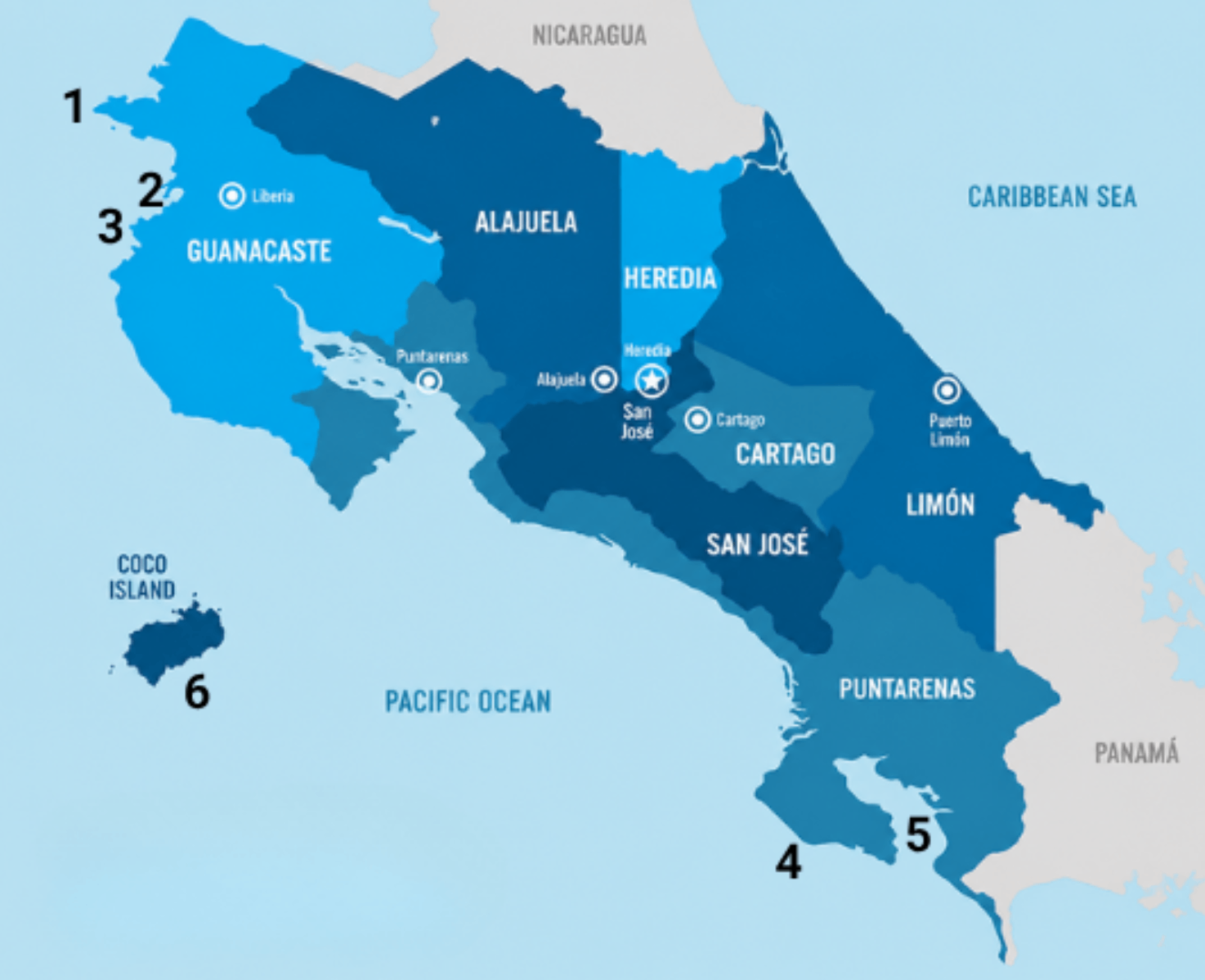
● 1 – Bat Islands
● 2 – Gulf of Papagayo
● 4 – Osa Peninsula
● 5 – Golfo Dulce
 DEPTH RANGE
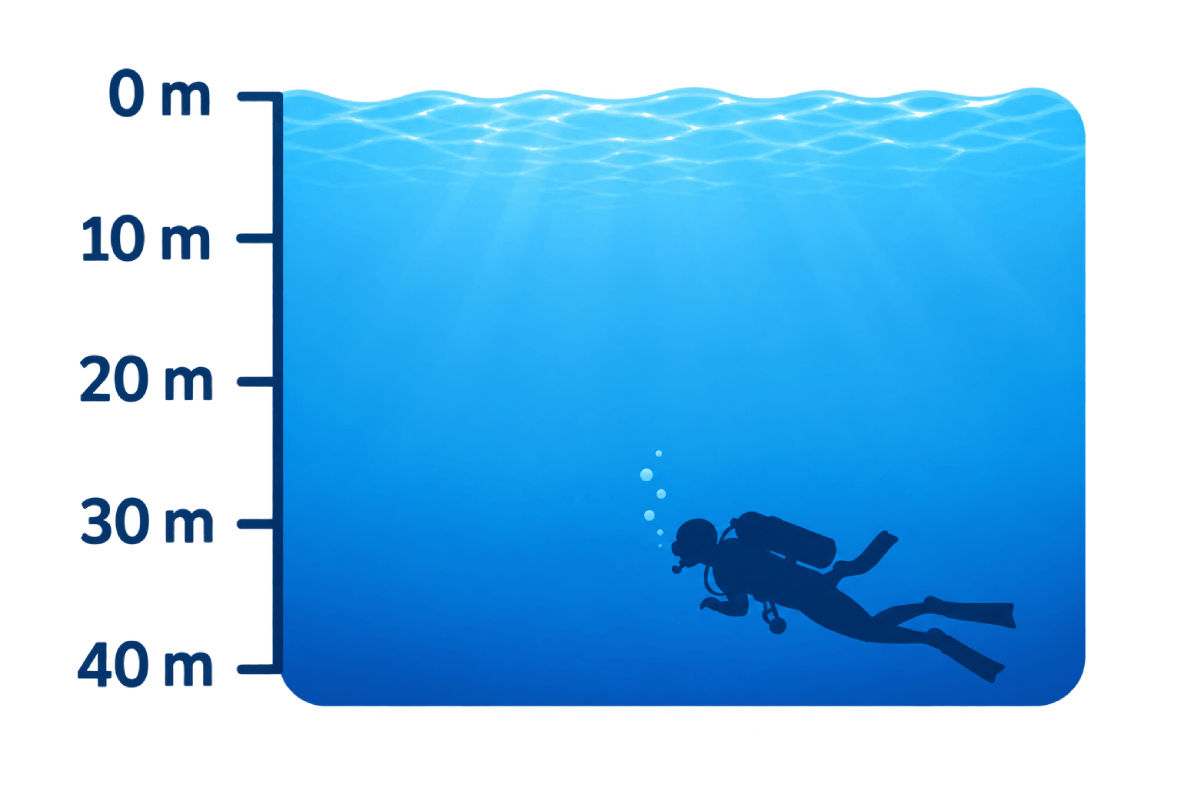
General: 3–150 m (10–492 ft)
Common: 3–30 m (10–98 ft)
 HABITAT
🌊 Marine and ocean waters
🪸 Near reefs
Freshwater rivers and lakes
A euryhaline species, capable of living in both marine environments and freshwater rivers and lakes.
 HOW TO IDENTIFY IT
- Length: 90–350 cm (3–11.5 ft).
- Weight: 90–230 kg (198–507 lb).
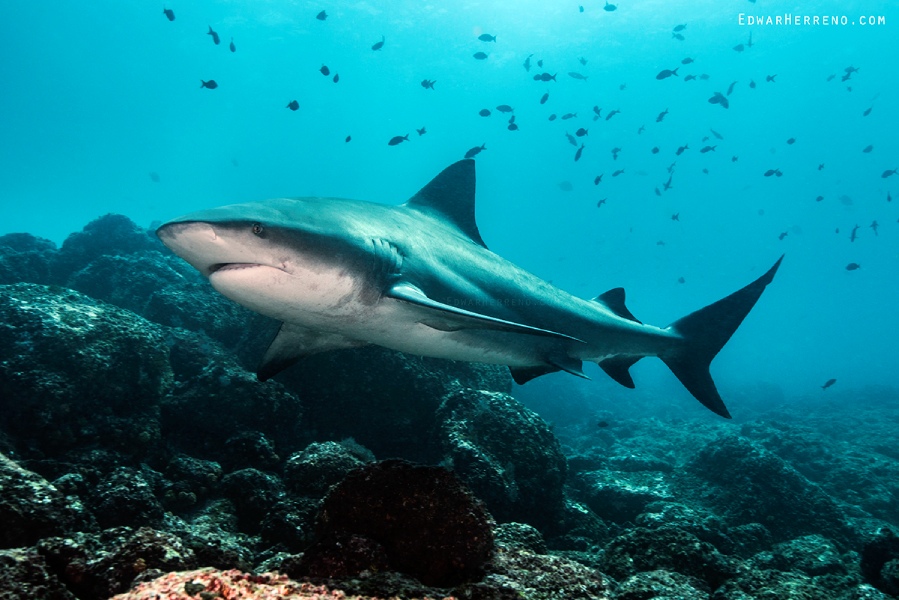
- Robust, heavily built body.
- Short, rounded snout, small eyes and a wide mouth.
- Gray upper body and white underside.
- Tall, triangular first dorsal fin.
- Broad, rounded pectoral fins.
- Asymmetrical tail, with the upper lobe longer than the lower lobe (heterocercal).
 SIMILAR SPECIES
- Silvertip Shark (Carcharhinus albimarginatus): White tips on the first dorsal and pectoral fins. More slender body.
 SIGHTING FREQUENCY
- ●●○○○ Rare
- ●●●●○ Common at the Bat Islands
 REPRODUCTION
- Sexual maturity: 8–12 years.
- 🦈 Placental viviparous: gives birth to live young nourished through a placenta.
- Uses rivers and estuaries as nursery areas.
- Gestation: 9–12 months.
- Litters contain 2–13 pups, measuring 50–75 cm (20–30 in) at birth.
 BEHAVIOR
- Solitary or found in small groups.
- A strong, active swimmer that hunts both during the day and at night.
- Highly adaptable and able to enter brackish and freshwater environments.
 DIET
- 🐟 Fish
- Rays
- 🦀 Crustaceans
- 🐚 Mollusks
- Occasionally feeds on carrion.
- An apex predator in coastal and river ecosystems.