Green Sea Turtle
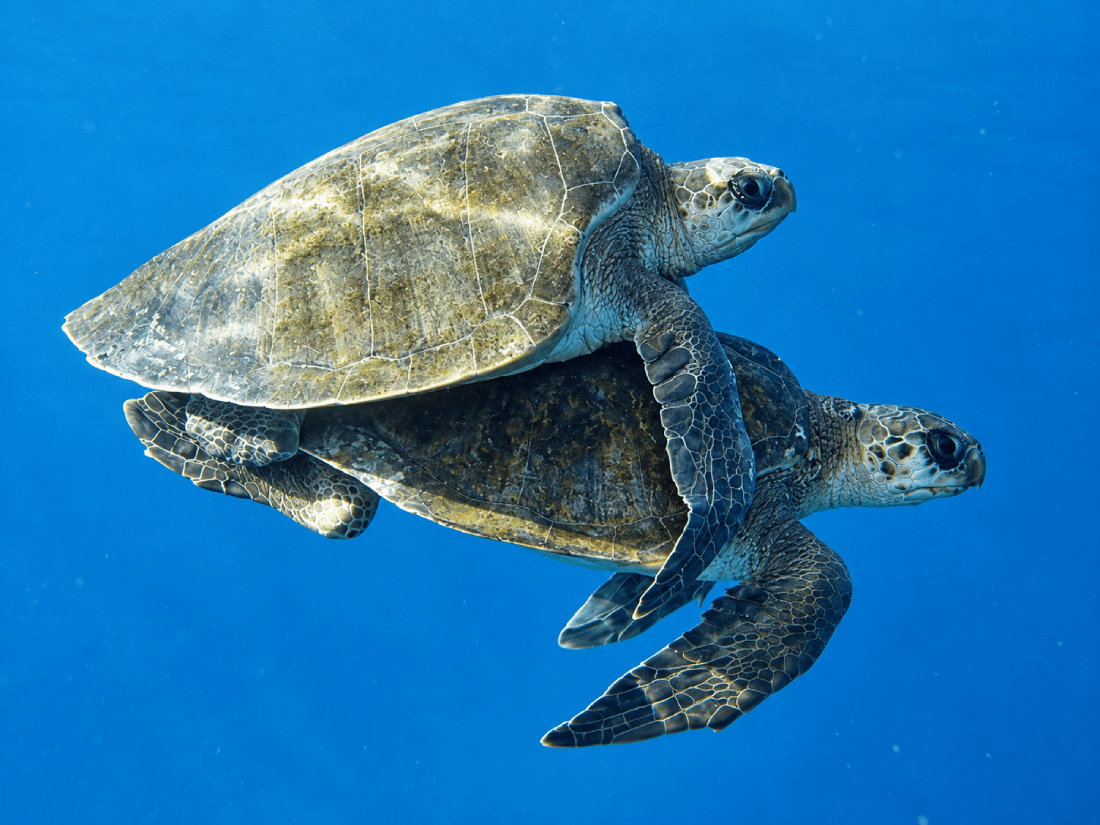
SCIENTIFIC NAME:
Chelonia mydas
🇪🇸 Common name (ES): Tortuga verde
🇺🇸 Common name (EN): Green Sea Turtle
CLASSIFICATION
Phylum:
Chordata
Class:
Reptilia
Order:
Testudines
Family:
Cheloniidae
Genus:
Chelonia
Species:
Chelonia mydas
 DISTRIBUTION IN COSTA RICA
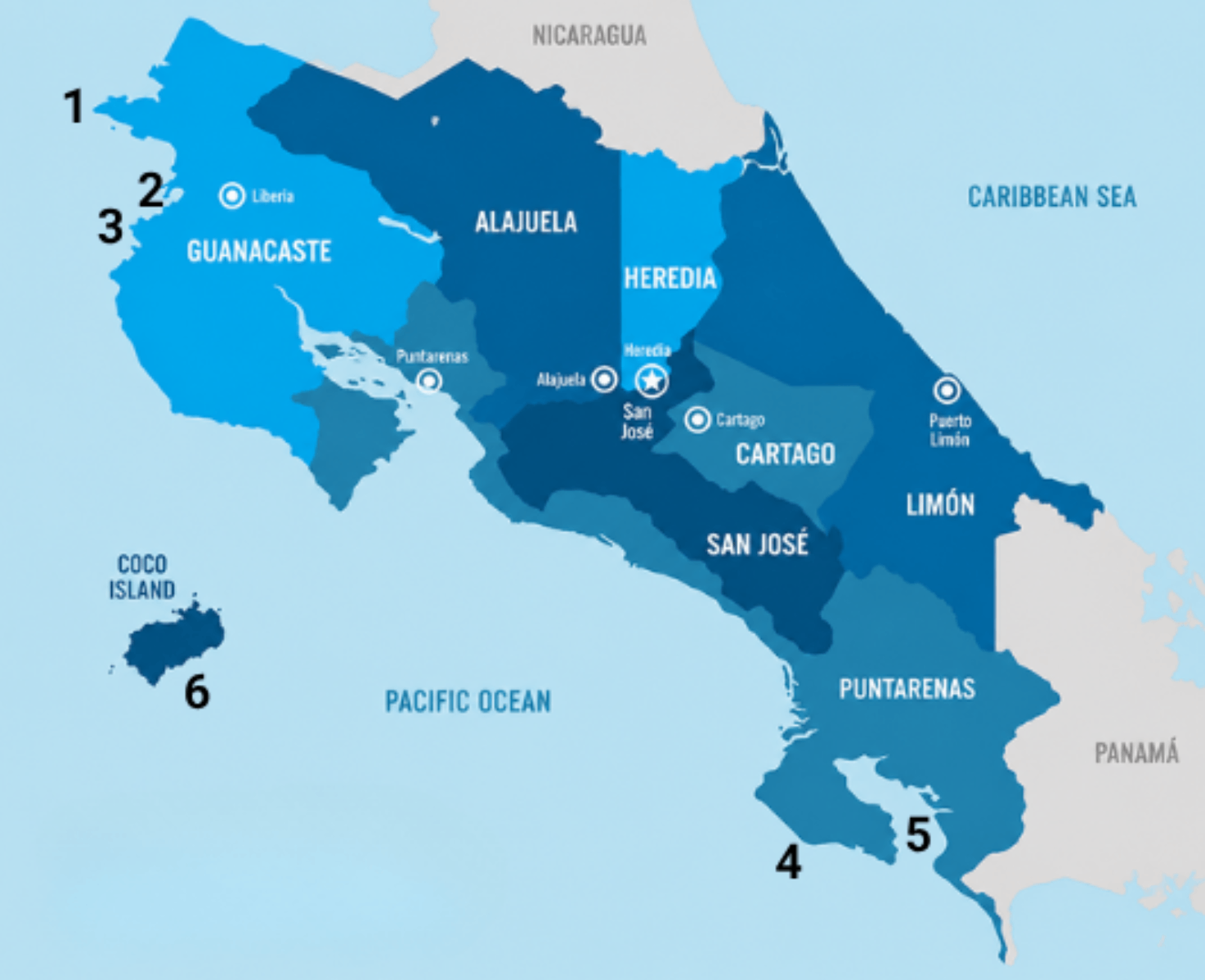
● 1 – Murciélago
● 2 – Papagayo
● 3 – Catalinas
● 4 – Osa
● 5 – Golfo Dulce
● 6 – Isla del Coco
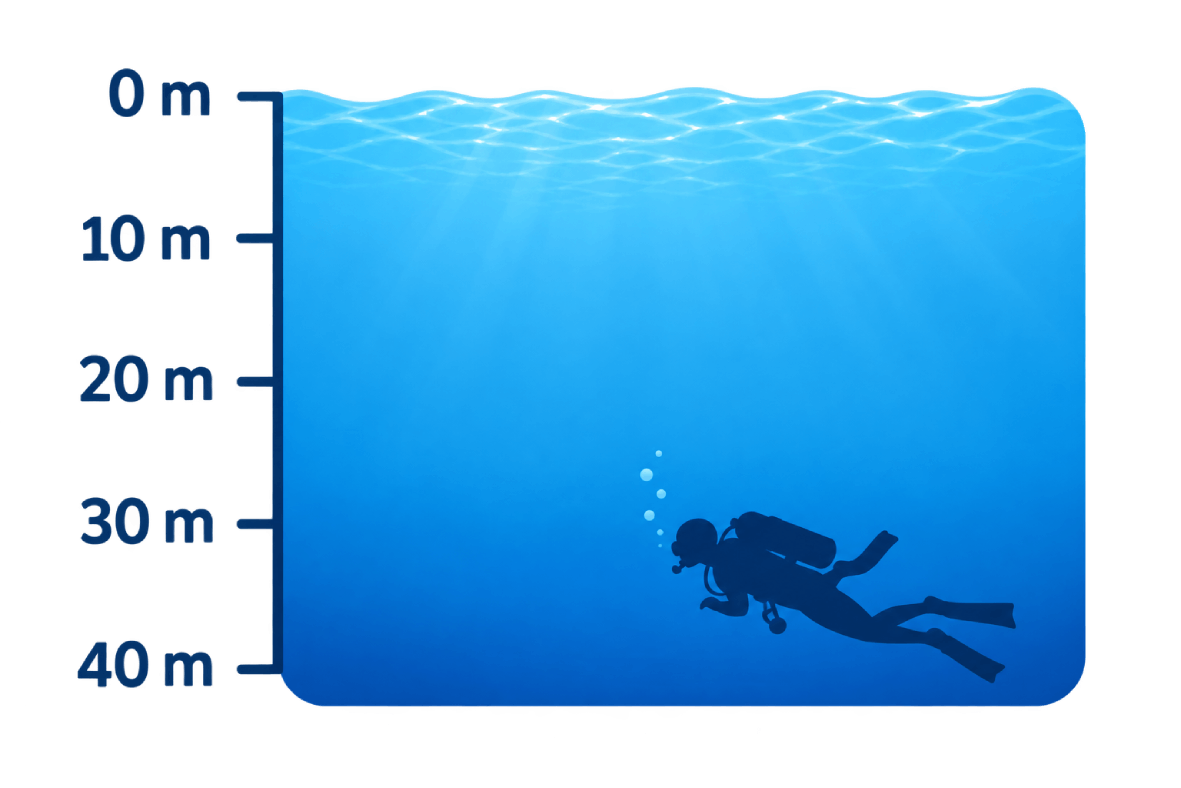
 DEPTH RANGE
Depth range: 1–50 m (3–164 ft)
Common: 1–30 m (3–98 ft)
 HABITAT
🪸 Reefs
🌊 Coastal Areas
🌿 Seagrass Beds
🏝️ Shallow Waters
 HOW TO IDENTIFY IT
- Adult size: up to 1.4 m (5 ft)
- Adult weight: up to 180 kg
- Oval, smooth shell, usually olive-green to brown, with radiating patterns.
- Small head compared with the body and two pairs of prefrontal scales.
- Flippers with one visible claw on each front flipper.
- A single large scale at the front of each flipper and two on the rear flippers.
- Smooth shell without ridges or keels, usually olive-brown in color.
 SIMILAR SPECIES
- Hawksbill Turtle (Eretmochelys imbricata): Shell with overlapping scutes and a more curved, pointed beak.
- Olive Ridley Turtle (Lepidochelys olivacea): Smaller and more compact. Shell usually more rounded and uniformly olive-gray.
 SIGHTING FREQUENCY
- ●●●○○ Regular
 REPRODUCTION
- Sexual maturity Between 20 and 40 years, when they reach a shell length of approximately 70–100 cm.
- They are oviparous, with internal fertilization.The nesting season occurs throughout the year, with peaks during the rainy season.
- Females lay 2–5 nests at intervals of 10–15 days. Each nest contains approximately 100–150 eggs.
- Hatchlings emerge from the nest after approximately 45–60 days, depending on the incubation temperature.
- Higher temperatures generally produce more females, while lower temperatures produce more males.
- 🥚 Egg-laying (Oviparous)
 BEHAVIOR
- Generally calm and curious.
- Feeds mainly on seagrass.
- Surfaces to breathe approximately every 20–30 minutes.
 DIET
DIET
- 🌿 Seagrass
- 🟢 Algae
- 🦐 Small Invertebrates