Olive Ridley Sea Turtle
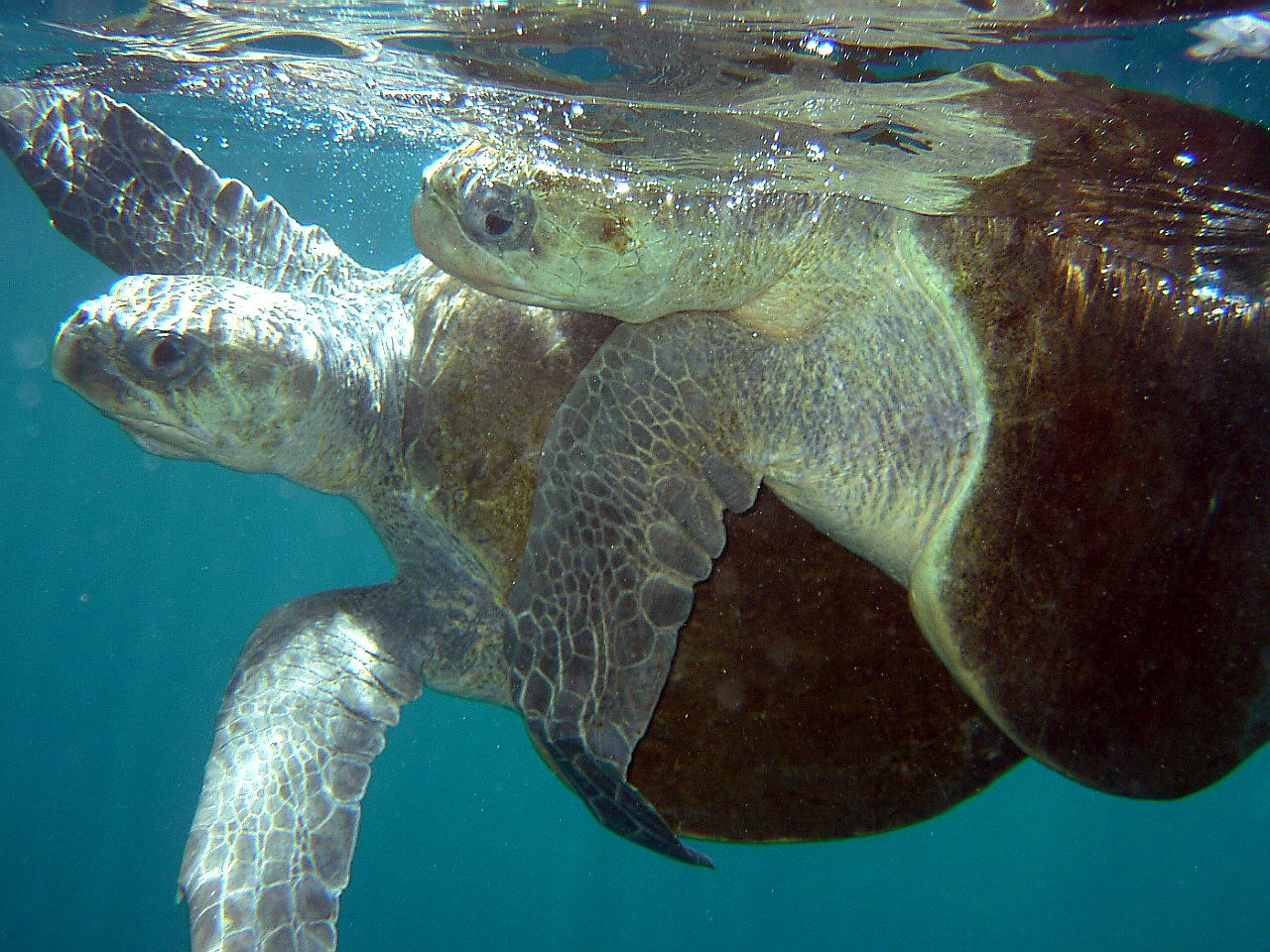
SCIENTIFIC NAME:
Lepidochelys olivacea
🇪🇸 Common name (ES): Tortuga lora / golfina
🇺🇸 Common name (EN): Olive Ridley Sea Turtle
CLASSIFICATION
Phylum:
Chordata
Class:
Reptilia
Order:
Testudines
Family:
Cheloniidae
Genus:
Lepidochelys
Species:
Lepidochelys olivacea
 DISTRIBUTION IN COSTA RICA
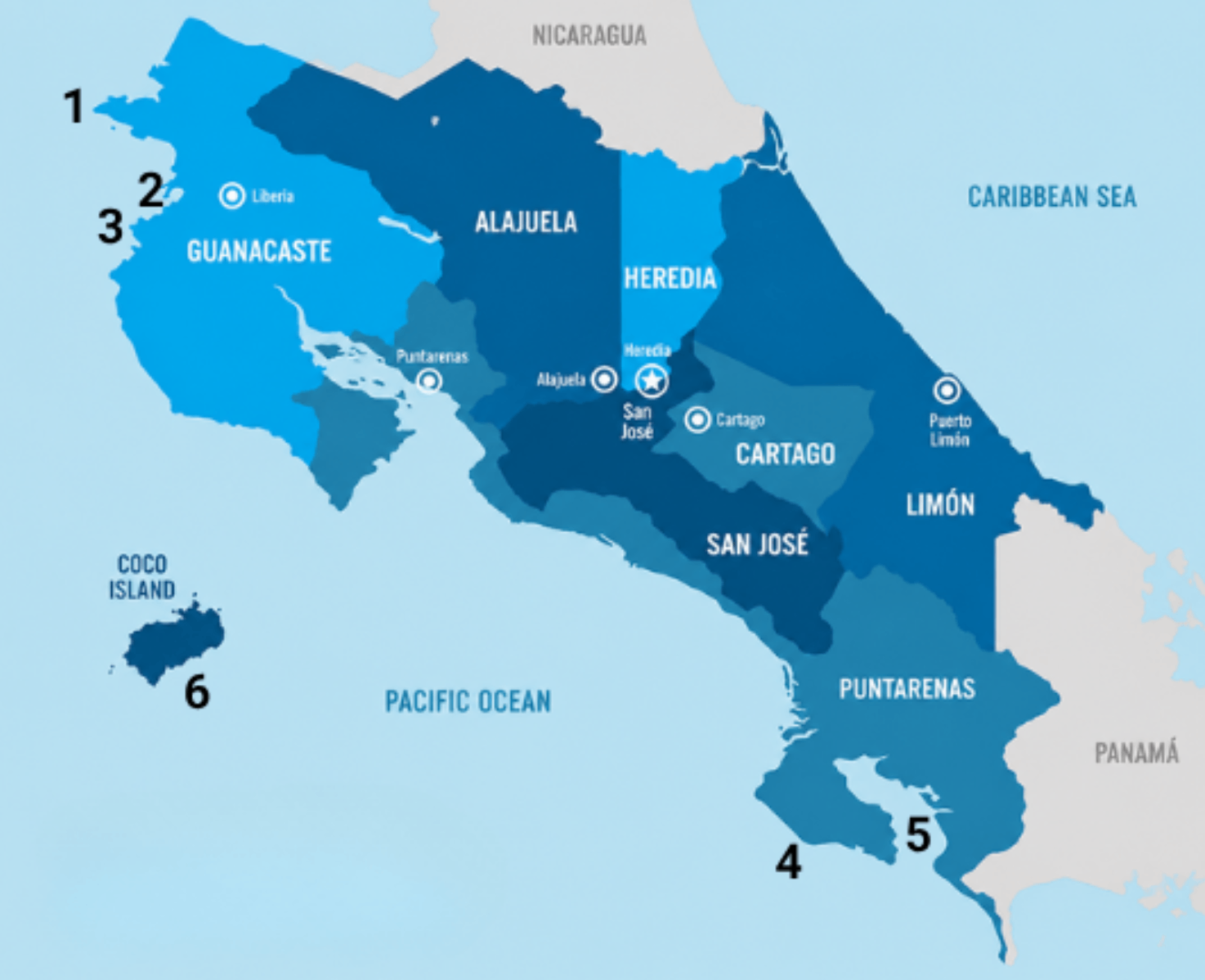
● 1 – Bat Islands
● 2 – Gulf of Papagayo
● 3 – Catalina Islands
● 4 – Osa Peninsula
● 5 – Golfo Dulce
● 6 – Cocos Island
 DEPTH RANGE
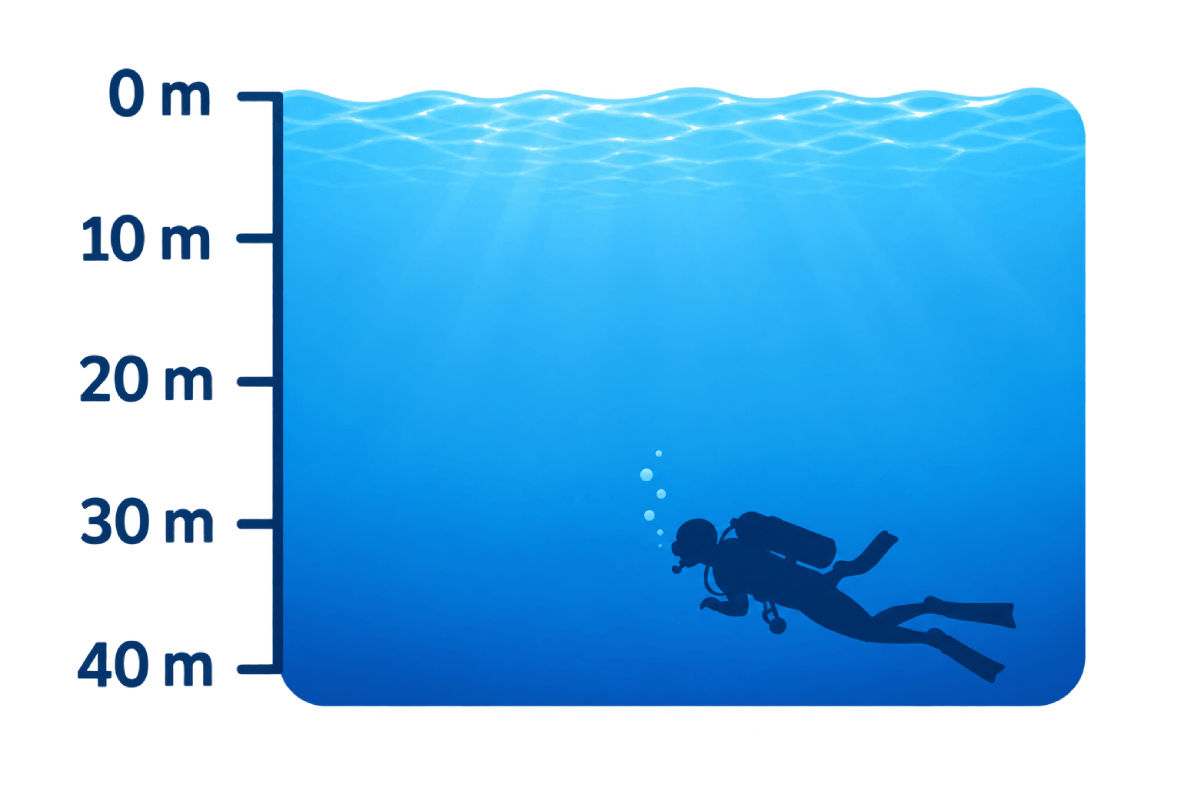
General: 0–150 m (0–492 ft)
Common: 0–30 m (0–98 ft)
 HABITAT
🌊 Pelagic waters
Occasionally feeds on the seabed in coastal shelf waters.
🏖️ Nests on dark-sand beaches.
 HOW TO IDENTIFY IT
- Length: 60–75 cm (2–2.5 ft); the world’s second-smallest sea turtle.
- Smooth, heart-shaped shell with dark olive-green coloration.
- Variable and often asymmetrical number of costal scutes on the shell.
- Medium-sized head with jaws adapted for crushing.
 SIMILAR SPECIES
- Green Turtle (Chelonia mydas): Rounder, green shell with four pairs of costal scutes and a larger head.
- Hawksbill Turtle (Eretmochelys imbricata): Serrated shell margin, a more strongly curved beak and four pairs of costal scutes.
 SIGHTING FREQUENCY
- ●●○○○ Rare–Occasional
 REPRODUCTION
- 🥚 Oviparous: during the breeding season, females come ashore at dusk in mass nesting events known as arribadas.
- Lays an average of 100 eggs per clutch.
- Hatchling sex is determined by incubation temperature.
- Incubation lasts 45–55 days.
- Sexual maturity: 13–15 years.
- Adult males have much longer, thicker tails than females.
 BEHAVIOR
- Highly migratory, traveling thousands of kilometers across the open ocean.
- Spends the day feeding or basking at the water’s surface.
- Communicates through visual and chemical signals.
- Usually solitary and widely dispersed for most of the year; females gather in coordinated groups offshore from nesting beaches.
 DIET
- Omnivorous / carnivorous.
- 🦀 Crabs, shrimp and lobsters.
- 🐚 Sea snails.
- In the open ocean: jellyfish, tunicates, salps, fish eggs and macroalgae.